بِسْمِ اللهِ الرَّحْمنِ الرَّحِيمِِ
الَّذِينَ يُبَلِّغُونَ رِسَالاَتِ اللهِ وَيَخْشَوْنَهُ وَلاَ يَخْشَوْنَ أَحَدًا إِلاَّ اللهَ وَكَفَى بِاللهِ حَسِيبًا

Khamis, Ogos 29, 2013

مخطط إسقاط الإسلاميين في مصر .. بداية ونهاية

 معتز بالله محمد – كاتب مصري

خاص بالراصد
لم تأت الإطاحة بالرئيس المصري المنتخب محمد مرسي، كخطوة منفردة انعكاسا فقط لتردي الأحوال المعيشية لملايين المصريين وتدهور الاقتصاد والخدمات الرئيسية، كما حاول قادة الانقلاب العسكري وأبواقهم الإعلامية تصوير الأمر، وإنما جاءت في إطار مخطط استخباراتي دولي إقليمي مصري، تبلورت أولى ملامحه منذ الإطاحة بالرئيس المخلوع حسني مبارك في أعقاب ثورة شعبية هادرة ( 25 يناير 2011)، وقبل الدخول في تفاصيل المخطط يبقى من المهم استعراض موقف الأطراف الفاعلة فيه في أعقاب اندلاع الثورة المصرية قبل أكثر من عامين ونصف العام.
فأمريكا التي كانت ترى في مبارك الحليف الاستراتيجي الأمين الذي دأب على حفظ مصالحها في المنطقة وتحويل مصر - قلب الأمة العربية- إلى مجرد تابع أو مدير أعمال لراعي البقر الأمريكي، وجدت نفسها مع اندلاع ثورة يناير في حالة من التخبط غير المسبوق نتيجة لفجائية الثورة وعدم توقع تطور الاحتجاجات الشعبية على هذا النحو، فأصبحت إدارة أوباما بين شقي الرحى ما بين شعاراتها في حماية الحرية والديمقراطية وحقوق الإنسان من جهة وبين مصالحها وأمن إسرائيل الذي وقف مبارك على مدى 30 عاما حارسا أمينا له، والتخوف من انتقال هذا الغضب الشعبي إلى مزيد من الدول الحليفة في المنطقة.
ومن ثم تذبذبت الردود الأمريكية على الثورة التي باتت مرهونة فقط بأيدي الشعب المصري الذي قرر تحديد مصيره. بكلمات أخرى قررت أمريكا أن تترك للمصريين الفعل على أن تتعامل مع رد الفعل بما يتسق مع مصالحها، فكان في النهاية أن باركت الثورة التي تعلم جيدا أنها ستأتي بالإسلاميين وتحديدا الإخوان المسلمين إلى سدة الحكم.
وفي المجمل اتخذت الولايات المتحدة الأمريكية، موقفاً متحفظاً، متذرعةً بترك الأمر للشعب والجيش المصريين، بيد أن استمرار التظاهرات وانتشارها في القاهرة ومختلف المحافظات  المصرية الكبرى أقنع الولايات المتحدة بنهاية نظام حسني مبارك، وهو ما دفع الرئيس باراك أوباما إلى أن يهنئ الشعب المصري في أعقاب تنحي مبارك في 11 فبراير، على الرغم من تداعيات ذلك على السياسة الخارجية للولايات المتحدة وحلفائها التقليديين.
إسرائيل وثورة يناير
إسرائيل من جانبها – والتي اعتبرت أن عصر مبارك هو العصر الذهبي لعلاقاتها بالدولة المصرية- شهدت حالة من الصدمة هي الأخرى والتي حاول قادة دولة الاحتلال امتصاصها فكان أن وجه رئيس حكومتها بنيامين نتنياهو في 28 يناير أمرا إلى جميع المتحدثين الرسميين باسم الحكومة، ومن الوزراء، بعدم التحدث إلى وسائل الإعلام بشأن ما يحصل في مصر، وكان التعليل لذلك أن إسرائيل ليست معنية بأن تظهر بصورة من يقحم نفسه في الشأن المصري الداخلي.
وفي اليوم التالي بعثت حكومة نتنياهو برقيات سرية عاجلة إلى الولايات المتحدة والدول الأوروبية أكدت فيها أن للغرب مصلحة في الحفاظ على الاستقرار في مصر، وحضت هذه الدول على الحد من انتقاداتها العلنية الموجهة إلى مبارك، وأعربت الحكومة الإسرائيلية عن استيائها الشديد من الخط العلني الأمريكي والأوروبي بشأن التطورات في مصر.
باختصار قررت إسرائيل الانتظار والتريث والتعامل مع الواقع الجديد بما يحقق مصالحها وإن كانت تعرف بحسب محلليها السياسيين ومفكريها أن سقوط مبارك وتولي نظام إسلامي مقاليد الأمور سيفرض عليها مزيدا من التحديات الخاصة باتفاقية كامب ديفيد وحركات المقاومة الفلسطينية.
الثورة والخليج
كذلك شكل سقوط مبارك خطرا محدقا بعدد من دول الخليج العربي الملكية التي رأت أن سقوط النظام في مصر يهدد استقرارها لاسيما وهي لا تملك القوة التي كان يملكها مبارك والتي انهارت تحت وطأة الغضب الشعبي ومن ثم خشيت تلك الدول على نفسها مما سمته دولة مثل الإمارات (تصدير الثورة المصرية) وهو الاتهام الذي وجهته السلطات هناك فيما بعد لعدد من المصريين تم الزج بهم في السجون الإماراتية بإيعاز من ضاحي خلفان قائد شرطة دبي.
هذه الدول مجتمعة مثلت الشق الخارجي في مؤامرة إسقاط الإسلاميين في مصر، وهو ما سنتطرق إليه لاحقا.
العنصر الداخلي
شكل نجاح ثورة 25 يناير ضربة قاصمة لنظام متشعب ومتجذر في مؤسسات الدولة المصرية، بما في ذلك المؤسسات الأمنية بدءا من أجهزة الاستخبارات والشرطة مرورا بالجهاز الإداري بالدولة وصولا إلى رجال الأعمال، والإعلام والقضاء، الذين اعتبروا الإطاحة بنظام مبارك تهديدا وجوديا لهم، وإيذانا باقتلاع شجرة الفساد المتشعبة التي تسلقوها فوصلت بهم إلى عنان السماء.
التيار العلماني لم يكن بعيدا عن المشهد فقد انضم إلى تلك الجوقة فيما بعد، فشخصيات كالبرادعي وحمدين صباحي وغيرهم بما مثلوه من جبهات مضادة للفساد ولنظام مبارك، لعبوا دورا كبيرا في مخطط إسقاط الإسلاميين، ولم يجدوا غضاضة في التحالف مع رموز نظام مبارك، فتوحدوا جميعا لتحقيق هدف واحد.
قنوات الفتنة
سعت كل هذه القوى بشقيها الخارجي والداخلي عبر تحالف غير معلن سنتطرق إليه لاحقا، إلى منع وصول الإسلاميين للحكم بأي ثمن فكان أن فاز الإسلاميون بأول انتخابات حرة نزيهة لمجلس الشعب، ومن هنا بدأت خيوط المؤامرة تتضح بتشويه الإسلاميين وشيطنتهم وتأليب الشارع عليهم من خلال قنوات تم إنشاؤها بأموال رجال أعمال مبارك، تفبرك الأخبار وتختلق القصص ونرى ذلك جليا في تعاطي مثل هذه القنوات مع قضية مثل قيام النائب ممدوح إسماعيل بإطلاق الأذان داخل مجلس الشعب، ومع قضية الضباط الملتحين، وعشرات القضايا الأخرى.
ومن بين هذه القنوات: «سي بي سي» و«مودرن» وقنوات «النهار» التي يملكها جميعا محمد الأمين رجل الأعمال المقرب من مبارك والذي كان ينادي بالتوريث والذي ضخ على سبيل المثال في قناة واحدة هي "سي بي سي" أكثر من 50 مليار جنيه، وهي غير معروفة المصدر، والغريب أن الصحافة تحاشت الحديث عنه بسبب اتساع دائرة المستفيدين من نجوم الصحافة المعروفين والذين يتصدرون المشهد حاليا.
أخطاء الإسلاميين
كان الحاكم الفعلي للبلاد خلال هذه الفترة هو المجلس العسكري بقيادة المشير محمد حسين طنطاوي، ومنذ بداية الفترة الانتقالية سقط الإسلاميون في الفخ المنصوب لهم وفقا للمخطط، فتخلوا عن الميادين التي أوصلتهم للسلطة وقالوا إن الشرعية للبرلمان ولم تعد في الميدان، فكان أن انشق الصف الثوري، واستعدى الإسلاميون الكثير من قطاعاته لاسيما بعد تبرير وقائع قتل وسحل المتظاهرين وتعرية إحدى الفتيات في أحداث محمد محمود وميدان التحرير.
كذلك كان من أهم الأخطاء الاستراتيجية والتكتيكية التي وقع فيها الإسلاميون نظرتهم الضيقة فيما يتعلق بتفكيك مراكز القوى في نظام مبارك، فقد غض التيار الإسلامي عموما والإخوان خصوصا الطرف عن تفكيك هذه المراكز التي كانت تعاضد وتناصر نظام مبارك، وذلك انطلاقا من مبدأ تحقيق المصالحة وفتح صفحة جديدة مع هذه القوى ظنا منهم أن هذه المراكز ستعمل لصالح البلاد، مبرهنين بذلك على سذاجة سياسية كبيرة، ومتغاضين عن أبجديات البناء المؤسسي فيما بعد الثورات والتي تقضي بالتخلص من مراكز القوى القديمة التي ستعمل لا محالة على إعادة النظام السابق لتحقيق منافعها ومصالحها الخاصة.
وفي مواجهة الهجمة العلمانية الشرسة على البرلمان الإسلامي، قابل الإسلاميون ذلك بالرهان على رصيدهم في الشارع والذي ظنوا أن حملات التشويه والتلفيق لن تؤثر عليه، وكان في استطاعتهم تدشين عدة قنوات بآليات عصرية لمواجهة قنوات فلول النظام، والحفاظ على ذلك الرصيد الذي بدأ يتآكل في الشارع، فظهرت قنوات إسلامية ضعيفة للغاية في مواجهة قنوات تمتهن الكذب لكن بمهنية عالية، وبقدرة رهيبة على قلب الحقائق وتزييف الواقع.
وبذلك فقد الإسلاميون في ظل حكم العسكر الكثير من مكتسباتهم القليلة، وأدت خطواتهم الساذجة والانفعالية إلى مضاعفة ورطتهم السياسية في المرحلة الانتقالية.
انتخابات الرئاسة
كل هذه المقدمات لعبت دورا كبيرا في تشويه صورة الإسلاميين والإخوان المسلمين تحديدا، وقد استغل الإعلام المضاد ترشيح الدكتور محمد مرسي- بعد قرار لجنة الانتخابات باستبعاد مرشح الجماعة خيرت الشاطر - لصالح المرشحين الآخرين لاسيما حمدين صباحي رئيس حزب التيار الشعبي، ومرشح الفلول أحمد شفيق، ووصف مرسي بالمرشح "الإستبن".
وجاءت الإعادة بين شفيق ومرسي لتؤكد حجم الهوة التي ضربت المجتمع المصري، الذي بات قطاع واسع منه يحنّ لعودة نظام مبارك، ويكفر بالثورة كفرا صريحا، وما يعضد من تلك الفكرة هو الفارق الضئيل الذي حققه مرسي في انتخابات الرئاسة حيث فاز بنسبة 51% فقط، ومنذ ذلك الوقت بدأ مخطط الإطاحة بالإسلاميين يبدو أكثر وضوحا، وبدأت خيوط المؤامرة تتضح، ويصطف خلفها الكثيرون من المحسوبين على التيار العلماني الذي كان يدافع في الماضي عن الثورة.
 وظهرت بصمات أجهزة المخابرات الأمريكية والخليجية والفلسطينية والمصرية التي أدارت جميعها مخططا محكما لإسقاط الرئيس المنتخب، وتبلور ذلك في إنشاء حركة "تمرد" التي كانت الأداة ذات الوجهة الشعبية المدفوعة مخابراتيا للإجهاز على المشروع الإسلامي، إضافة إلى عشرات الوثائق والتقارير، المصرية والفلسطينية والإسرائيلية والأمريكية التي تثبت تورط تلك الأجهزة في إنهاء حكم الإخوان المسلمين في مصر، وتسليم البلاد على طبق من ذهب للحكم العلماني، وسوف نوجز أهم ملامح المخطط خلال عام من حكم مرسي، لصعوبة تناوله بالتفصيل، فربما يحتاج إلى كتاب كامل للقيام بذلك.
الحرب بالأزمات
اعتمد مخطط إسقاط الرئيس على فكرة إفشاله والتي قامت هي الأخرى على ثلاثة عناصر هامة، أولها كما أسلفنا الإعلام، الذي يسميه الإسلاميون "سحرة فرعون" والذي لم ينفك ينفث سمومه في عقول المصريين فيشوه وعيهم ويزيف إرادتهم بمعلومات وتقارير مغلوطة.
أما العنصر الثاني فكان خلق الأزمات عبر الدولة العميقة التي كانت تسيطر فعليا على مفاصل مصر، حيث كان يتم سكب البنزين والسولار في مجاري الصرف الصحي والصحراء وهو ما تم كشفه في مدينة المحلة الكبرى بمحافظة الغربية وفي مدينة الغردقة، وذلك في الوقت الذي كانت فيه السيارات بمختلف أنواعها تقف بالطوابير أمام محطات الوقود. كذلك كان الحال بالنسبة للكهرباء التي كان يتم قطعها لساعات طويلة على مدى عام من حكم مرسي.
وكان للبلطجية الذين يقدر عددهم في مصر بما يزيد عن 400 ألف دور بارز في تأليب المواطنين على رئيسهم المنتخب، فعاثوا فسادا في البلاد: قتلا، وسرقة، واغتصابا، واختطافا وما إلى ذلك من جرائم، وقفت الشرطة منها موقف المتفرج بحجة أنها لا تملك الإمكانيات اللازمة لوقف البلطجة وترويع المواطنين. وفي أحيان كثيرة كان من يذهب للتبليغ عن تعرضه لأي حادث أن يقولوا له في مراكز الشرطة "نحن في أجازة أربعة سنوات" في إشارة إلى قرار الضباط بعدم العمل خلال فترة ولاية مرسي والتي كان من المقرر أن تستمر لأربع سنوات.
العنصر الثالث كان عبارة عن تشجيع الإضرابات والاعتصامات الفئوية التي شلت مصر بشكل جزئي، حيث انتشرت في المؤسسات والقطاعات الحيوية كالسكك الحديدية والنقل العام، والمستشفيات والمدارس، بل وداخل منظومة الشرطة نفسها، وكان الهدف من ذلك إحباط محاولات الرئيس لتحقيق أي إنجازات مهمة قد تحسب له، وتزيد من شعبيته.
الغريب أنه بعد عزل مرسي وتشكيل حكومة جديدة برئاسة الببلاوي، تم الإبقاء على وزراء البترول والكهرباء والداخلية رغم أزمات الوقود والكهرباء وغياب الأمن، الأمر الذي يؤكد أن هؤلاء الوزراء وغيرهم هم من تسبب في خلق تلك الأزمات، ثم كان معهم مفاتيح حلها، فبعد 30 يونيو 2013 لم تشهد مصر أزمة في البنزين ولا السولار وتم توفيرهما بكثافة خلال 24 ساعة في محطات الوقود، وكذلك الحال بالنسبة للكهرباء والأمن.
وثائق وتقارير
وسوف نتناول في عجالة مجموعة من الوثائق والتقارير الأجنبية التي تثبت تورط تل أبيب وواشنطن ومخابرات حركة فتح في رام الله ومخابرات عربية أخرى، في التخطيط لعملية إسقاط مرسي في 30 يونيو.
في البداية لابد من الإشارة إلى وثائق أمريكية كشفت قيام إدارة أوباما بتمويل المعارضين لمرسي بغية إسقاطه، ووفقا للنسخة الإنجليزية لموقع الجزيرة، فإن سلسلة من الأدلة تؤكد ضخ الأموال الأمريكية للمجموعات المصرية التي كانت تضغط من أجل إزالة الرئيس.
والوثائق التي حصل عليها برنامج التحقيقات الصحفية في جامعة كاليفورنيا في بيركلي تظهر قنوات ضخ للأموال الأمريكية من خلال برنامج لوزارة الخارجية الأمريكية لتعزيز الديمقراطية في منطقة الشرق الأوسط، يدعم بقوة النشطاء والسياسيين الذين ظهروا في أثناء الاضطرابات في مصر، بعد الإطاحة بحكم الرئيس المخلوع حسني مبارك الاستبدادي في انتفاضة شعبية في فبراير 2011.
الموقع أشار إلى أن البرنامج الأمريكي الذي يطلق عليه مسؤولون أمريكيون اسم مبادرة "مساعدة الديمقراطية"، هو جزء من جهد إدارة أوباما لمحاولة وقف تراجع العلمانيين الموالين لواشنطن، واستعادة نفوذهم في بلدان الربيع العربي التي شهدت صعودا من الإسلاميين، الذين يعارضون إلى حد كبير مصالح الولايات المتحدة في الشرق الأوسط.
هذه المبادرة التي تندرج تحتها عشرات المجموعات أرسلت الأموال لبعض المنظمات في مصر، حيث يتم تشغيل معظمها من قبل كبار أعضاء الأحزاب السياسية المناهضة لمرسي وهم من يوصفون بالعملاء المزدوجين كنشطاء المنظمات غير الحكومية "نشطاء "NGO".
ومن بين الشخصيات التي تلقت تمويلا من هذه الجهات الأمريكية المشبوهة جبهة الإنقاذ حيث قامت من خلال هذه الأموال بدعم حملات الاحتجاجات في الشوارع التي تحولت إلى العنف ضد الحكومة المنتخبة.
 وكذلك المعارِضة إسراء عبد الفتاح وهي ناشطة سياسية وتتنقل عبر مصر لحشد الدعم لحزبها حزب الدستور، الذي يتزعمه محمد البرادعي، وقالت إنها قدمت الدعم الكامل لاستيلاء الجيش على السلطة، وحثت الغرب ألا يسمي ما حدث بـ "انقلاب".
ومن كلماتها أيضا: "و30 يونيو هو اليوم الأخير من حكم مرسي" وهي الجملة التي أكدتها إسراء للصحافة قبل بضعة أسابيع من وقوع الانقلاب.
تقارير إسرائيلية
بعد أيام قليلة من الانقلاب خرج المحلل العسكري الإسرائيلي روني دانييل مؤكدا في حديث للقناة الثانية الإسرائيلية أن الجنرال عبد الفتاح السيسي أبلغ إسرائيل عن جهوده للإطاحة بالرئيس محمد مرسي قبل ثلاثة أيام من الانقلاب. وأكد دانييل أن الانقلاب العسكري في مصر مفيد لإسرائيل وأنه كان "مطلبا ملحا" لإسرائيل وأمنها.
وفي منتصف يوليو الماضي أذاع "راديو إسرائيل" خبرا أكد فيه قيام محمد البرادعي، نائب رئيس الجمهورية للشئون الدولية بزيارة قصيرة إلى إسرائيل بعد الانقلاب على الرئيس المعزول محمد مرسي، ومعه عدد من قيادات الجيش المصري، وأن الزيارة استمرت 5 ساعات فقط.
وفي 28 يوليو أكد مسئول قسم الأخبار في القناة العاشرة الإسرائيلية أنه بدون غطاء أمريكي لم يكن للانقلاب العسكري في مصر أن ينجح، وقال "نداف إيل": "أمريكا في ذات الوقت سمحت للسيسي بإنهاء المهمة. تمامًا، بالمناسبة، كما منحت الإدارة الأمريكية لنظام مبارك مهلة زمنية، أكثر من أسبوع، لتصفية الثورة الفتية. لكن مبارك فشل وحينئذ أدارت له أمريكا ظهرها، فأمريكا تمضي مع المنتصرين. تريد أن ينتصر الجيش لكن صبرها ينفد".
في 4 يوليو قال موقع "ديبكا" الإسرائيلي القريب من الموساد نقلا عن مصادر "استخبارية" أن ما أسماه الانقلاب العسكري في مصر ما كان ليتم لولا مساعدة قوية من دول الخليج، وعلى رأسها السعودية والإمارات العربية المتحدة.
وتابع أن "الرياض ودبي لم تضعا فقط خدمات المخابرات الخاصة بهما تحت تصرف السلطة العسكرية في مصر، لتمكينها من تنظيم الانقلاب ضد الإخوان المسلمين في القاهرة، إنما أيضًا منحوها التغطية المالية المطلوبة لذلك".
وفي 6 يوليو كتب "عمير ربوبورت"، المحلل العسكري الإسرائيلي والباحث في معهد "بيجن – السادات" للأبحاث الاستراتيجية، إن الفريق أول عبد الفتاح السيسي ينظر إليه في إسرائيل باعتباره بطلا وعبقريا وزعيما يتمتع برباطة جأش منقطعة النظير، كونه أطاح بالرئيس دون إطلاق رصاصة واحدة، ودون تنفيذ انقلاب عسكري حقيقي، ونجح أيضًا في تكوين جبهة مصرية واسعة من خلفه.
أما حركة فتح فقد أرادت ضرب عصفورين بحجر، مساندة القوى العلمانية الساعية لإسقاط الرئيس في مصر، وفي نفس الوقت تشويه حركة حماس لدى الجماهير المصرية المحبة لها، فعملت وفقا لوثائق مسربة كشفت عنها حماس مؤخرا على التعامل عبر مخابراتها مع وسائل إعلام مصرية مقروءة ومرئية، بهدف التنسيق لنشر وإذاعة أخبار مضللة عن حماس، وتركزت هذه الأخبار حول تورط حماس في حادث مقتل جنود رفح العام الماضي، وتورطها أيضاً في القلاقل التي تشهدها سيناء، كما تطرقت الخطة الإعلامية للحديث عن مخطط بين حماس وجماعة الإخوان في مصر لتحقيق مصالح الحركة في سيناء، وغيرها من الأكاذيب التي سوقها الإعلام المصري بحق حركة حماس طوال الفترة الماضية، من أجل تشويه الحركة. ولا عجب بعد ذلك أن نجد الرئيس مرسي متهم بقضية لا يسوقها إلا الصهاينة وهي التخابر مع حركة حماس!
وفي الحقيقة كانت محاولة الإضرار بحماس، محاولة عامة لضرب التأييد الشعبي المصري لحركات المقاومة الفلسطينية، والإضرار بموقف الرئيس مرسي، ليستفيد من ذلك جهتان هما إسرائيل وحركة فتح، إضافة إلى المعارضة المصرية في الداخل، ما يؤكد حقيقة التحالف الدولي الإقليمي للإجهاز على المشروع الإسلامي في مهده.
خاتمة
إن نزول ملايين المصريين، مسيحيين وفلولا، وعلمانيين، ومغيبين، وجنودا بزي مدني، يوم 30 يونيو لدعم انقلاب السيسي لم يكن سوى الفصل الأخير كما قلنا في المخطط الدولي الإقليمي للإطاحة برئيس تكالبت عليه كل قوى الأرض، وتهاون هو الآخر في اتخاذ قرارات قوية للإطاحة بمراكز القوى، وهي الخطوة التي كان من الأنسب اتخاذها بعد الإطاحة بوزير الدفاع السابق المشير طنطاوي في بدايات حكم مرسي، حيث كان من المفترض وقتها أن يتخلى مرسي عن منهج جماعته الإصلاحي ويتخذ قرارات ثورية يجتث بموجبها جذور الفساد لكن ذلك لم يحدث.
إن ملايين المصريين المنادين بعودة الشرعية في ميادين الاعتصام الآن يؤكدون أن المعركة لم تنته بعد، على عكس ما خطط السيسي الذي وجد نفسه في مأزق شديد، حيث خطط في البداية لجر الإسلاميين المؤيدين للرئيس إلى العنف ومن ثم يسهل إيجاد المبررات لسحقهم، ولكن هذا لم يحدث، وأبدى المعتصمون سلمية منقطعة النظير في مواجهة الرصاص بصدورهم العارية، ليبقى واضحا أن الأيام القادمة قد تشهد بداية انهيار المخطط الدولي للإجهاز على الإسلاميين في مصر، ووقتها فقط سوف ينكشف بالتفصيل ما خفي من هذا المخطط الشيطاني.


Baca lagi...

What Really Happened In Egypt – US Zionist Conspiracy

They wanted a Mubarak type secular client state
Muhammad Morsi, the first ever elected president in a  historic free and fair elections in Egypt which was ruled by the military dictators for more than six decades, was over thrown in a military coup on 3 Wednesday July 2013.

The army also suspended the constitution, installed a puppet regime, dispatched troops, clamped down on the media, closed down television stations including the Arabic unit of Al Jazeera,  beaten, detained and threatened journalists and began arresting and locking up  hundreds of  Muslim Brotherhood members including its leadership which supported Morsi.
This happened exactly a year after Morsi assumed office- dashing all dreams of democracy in Egypt. According to sources in Cairo Saudi Arabia, Israel and America jointly plotted and used Egypt’s armed forces to overthrow Morsi’s pro Islamic government and democracy.

The demonstrations against Morsi’s government were entirely organized and orchestrated by the armed forces and the three plotters-Saudi Arabia, Israel and America- poured billions of dollars to ensure its success.

Muslims worldwide remain deeply shocked at the treacherous Saudi involvement in overthrowing Islamic government in Egypt. Within twenty four hours the armed forces reestablished their police state.

The plot to crush the democracy movement was not something unexpected. The conspiracy was set in motion the day Morsi was elected to power. Morsi’s had only one disqualification and that was Muslim Brotherhood’s support to him.
He tried to assert the rights and dignity of Egyptian people. This is something the forces which flourished under the disgraced and overthrown dictator Hosni Mubarak, described by blind Egyptian clergy Sheikh Abdurrahman as the obedient dog of the West, was not worried about. They were all out to take back the power by hook or crook to restore their privileges.

Morsi had many powerful local, regional and international enemies. For example within Egypt those who flourished under Hosni Mubarak, hostile state sector and government apparatus did not support to Morsi’s regime. On top of all were the armed forces, best beneficiaries of the annual 1.5 billion dollar handouts from   US as reward for turning a blind eye to Israel’s conspiracies against the region to establish a greater Israel.

Equally keen to topple Morsi’s government was the country’s Coptic Christian population who came out en bloc to participate in the anti Morsi’ demonstration.

In the region Saudi Arabia, the most oppressive regime in this planet and often known as the American –Zionist wolf in Islamic clothing, was all out to destroy Morsi’ government as it was both democratic and Islamic oriented. Saudi regime which collaborates with US led European wars against Islam and Muslims had been very active in plotting to overthrow Morsi’s government.

With Saudi regime giving the lead its tails- oil rich Gulf countries, except Qatar, ruled by autocratic tribal dictators depending on US for their political survival- also became party to this conspiracy as they were all alarmed by the rise of democracy and Islam in Egypt .Most countries in the region ruled by scoundrels installed in power and protected by US and Europe too were alarmed at the rise of democracy and Islam.

In the international scene the US which leads the West in its campaign against Islam and Muslims worldwide cannot tolerate Islam raising its head within the democratic framework in Egypt. The first US reaction, within 24 hours after overthrowing democratically elected government, was to review this aid package.

On top of all Israel, the sole source of instability in the entire region, wanted Morsi’s government crushed to establish a client state.

In the midst there were numerous reports emerged of conspiracy to topple Morsi’s regime since early this year.


Baca lagi...

Rabu, Ogos 14, 2013

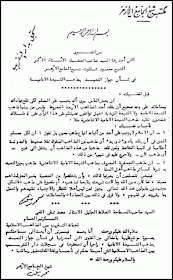
Fatwa Beberapa Orang Rektor Universiti Al-Azhar


Fatwa Al-Imam Al-Akbar Asy-Syeikh (Rektor) Al-Azhar Al-Marhum Allamah Mahmud Shaltut

(Mengenai mazhab Syiah Imamiyah & Zaidiyah)

Fatwa Pertama Al-Imam Al-Akbar Asy-Syeikh Al-Azhar Al-Marhum Allamah Mahmud Syaltut r.a

بسم الله الرحمن الرحيم
نص الفتوي التي أصدرها السيد صاحب الفضيلة الاستاذ الأکبر الشيخ محمود شلتوت شيخ الجامع الأزهر في شأن جواز التعبد بمذهب الشيعة الإمامية.
قيل لفضيلته: ان بعض الناس يري انه يجب علي المسلم لکي تقع عباداته و معاملاته علي وجه صحيح ان يقلد احد المذاهب الاربعة المعروفة و ليس من بينها مذهب الشيعة الامامية و لا الشيعة الزيدية، فهل توافقون فضيلتکم علي هذا الرآي علي اطلاقه فتمنعون تقليد مذهب الشيعة الإمامية الاثنا عشرية مثلاً.
فأجاب فضيلته:
1- ان الاسلام لا يوجب علي أحد من اتباعه اتباع مذهب معين بل نقول: ان لکل مسلم الحق في أن يقلد باديء ذي بدء أي مذهب من المذاهب المنقولة نقلاً صحيحاً و المدونة احکامها في کتبها الخاصة، و لمن قلد مذهباً من هذه المذاهب أن ينتقل الي غيره أي مذهب کان و لا حرج عليه في شيء من ذلک.
2- إن مذهب الجعفرية المعروف بمذهب الشيعة الامامية الاثنا عشرية مذهب يجوز التعبد به شرعاً کساير مذاهب اهل السنة.
فينبغي للمسلمين ان يعرفوا ذلک و ان يتخلصوا من العصبية بغير الحق لمذاهب معينة، فما کان دين الله و ما کانت شريعته بتابعة لمذهب او مقصورة علي مذهب، فالکل مجتهدون مقبولون عند الله تعالي، يجوز لمن ليس اهلاً للنظر و الاجتهاد تقليدهم و العمل بما يقررونه في فقههم و لا فرق في ذلک بين العبادات و المعاملات.
محمود شلتوت


Terjemahan Teks Fatwa Rektor Universiti Al-Azhar, Syaikh Al-Akbar Mahmud Shaltut


Pejabat Pusat Universiti Al-Azhar
Dengan nama Allah Yang Maha Pengasih Lagi Maha Penyayang
Teks Fatwa yang dikeluarkan oleh Yang Utama Syaikh Al-Akbar Mahmud Shaltut, Rektor Universitas Al-Azhar tentang Harusnya Mengikuti Mazhab Syiah Imamiah
Soal: Tuan Yang Utama, sebahagian orang berpendapat bahawa wajib bagi seorang Muslim untuk mengikuti salah satu dari empat mazhab yang terkenal agar ibadah dan muamalahnya benar secara syar’i, sementara Syiah Imamiah bukan salah satu dari empat mazhab tersebut, begitu juga Syiah Zaidiyah. Apakah Tuan Yang Utama setuju dengan pendapat ini dan melarang mengikuti mazhab Syiah Imamiyah Ithna ’Asyariyah misalnya?

Jawab:
1. Islam tidak menuntut seorang Muslim untuk mengikuti salah satu mazhab tertentu. Sebaliknya, kami katakan: setiap Muslim punya hak mengikuti salah satu mazhab yang telah diriwayatkan secara sahih dan fatwa-fatwanya telah dibukukan. Setiap orang yang mengikuti mazhab-mazhab tersebut boleh berpindah ke mazhab lain,dan ia nya bukan suatu kesalahan.
2. Mazhab Ja’fari, yang juga dikenal sebagai Syiah Imamiyah Itsna ‘Asyariyyah (Syiah Dua Belas Imam) adalah mazhab yang dari segi syarak (agama) adalah harus untuk diikuti dalam ibadah sebagaimana mazhab Sunni lainnya.

Kaum Muslim wajib mengetahui hal ini, dan sebolehnya menghindarkan diri dari prasangka buruk terhadap mazhab tertentu mana pun, kerana agama Allah dan Syari’atnya tidak pernah dibatasi pada mazhab tertentu. Para mujtahid mereka diterima oleh Allah Yang Mahakuasa, dan dibolehkan bagi yang bukan-mujtahid untuk mengikuti mereka dan menyepakati ajaran mereka baik dalam hal ibadah maupun muamalah (kira bicara).
Tandatangan,

Mahmud Shaltut
Fatwa di atas dikeluarkan pada 6 July 1959 dari Rektor Universitas al-Azhar dan selanjutnya disiarkan di berbagai penerbitan di Timur Tengah yang mencakup, tetapi tidak terbatas hanya pada:

1. Surat kabar Ash-Sha’ab (Mesir), terbitan 7 Juli 1959.
2. Surat kabar Al-Kifah (Lebanon), terbitan 8 Juli 1959.
Bagian di atas juga dapat ditemui dalam buku Inquiries About Islam oleh Muhammad Jawad Chirri, Direktur Pusat Islam Amerika (Islamic Center of America), 1986, Detroit, Michigan.


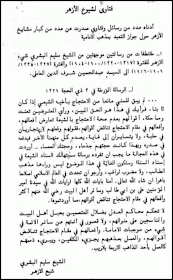
Fatwa Ke-2 Al-Imam Al-Akbar Asy-Syeikh(Rektor) Al-Azhar Al-Marhum Syeikh Salim Busyra

Fatwa Ke-2 Al-Imam Al-Akbar Asy-Syeikh Al-Azhar Al-Marhum Syeikh Salim Busyra r.a

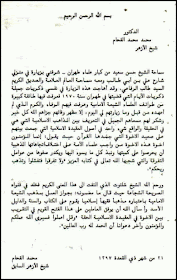
Fatwa Ke-3 Al-Imam Al-Akbar Asy-Syeikh (Rektor)Al-Azhar Muhammad Fahham

Fatwa Ke-3 Al-Imam Al-Akbar Asy-Syeikh Al-Azhar Muhammad Fahham

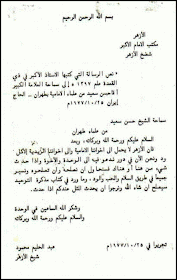
Fatwa Ke-4 Al-Imam Al-Akbar Asy-Syeikh(Rektor) Al-Azhar Abdul Halim Mahmud

Fatwa Ke-4 Al-Imam Al-Akbar Asy-Syeikh Al-Azhar Abdul Halim Mahmud


Baca lagi...

Ahli Sunnah dan Shiah (Bahagian 2)


السنة والشيعة 2

الإمام العلامة علي جمعة

(Bahagian 2)

والمسائل التي تتعلق بالرؤية الأساسية بين السنة والشيعة قد تنحصر في خمسة مسائل اكتنفها كثير من الغموض عبر التاريخ، وولدت محنًا بين الفريقين، وإن كانت هذه المحن في أصلها سياسي، إلا أن هذه الخلافات الخمسة كانت مبررًا عند كثير من الناس بإشعال الفتنة بين الفريقين، وتعميق الهوة بينهما، وهو ما لا نرضاه في حياتنا المعاصرة، حيث اطلع كل فريق على ما يقوله الآخر، ونشأت دعوات التقريب، وتأكدت ونمت وحققت مكاسب كبيرة، ولا يزال أمامنا الكثير من الجهد، حتى يتم القضاء على هذا الاحتقان المفتعل، الذي لا يرضى عنه الله ولا رسوله ولا المؤمنون.

1- اتهمت الشيعة بالقول بالبداء، وكلمة (البداء) تعني إن الله سبحانه وتعالى، وجل جلاله، يغير رأيه، وهو ما أنكرته الشيعة تمامًا، وفسرت ما ورد من عبارات حول هذا المصطلح، بما فسر به أهل السنة (القضاء المعلق) فأهل السنة يقولون : إن القضاء منه مبرم، ومنه معلق، أما الذي هو مبرم فهو علم الله الذي لا يتغير ولا يتبدل، وأما الذي هو معلق، فذلك المسطور في اللوح المحفوظ، والذي يمكن أن يغيره الله سبحانه وتعالى بسابق علمه وبإرادته المطلقة وقدرته التي لا نهاية لها، وحملوا عليه حديث رسول الله صلى الله عليه وآله وسلم : (لَا يَرُدُّ الْقَضَاءَ إِلَّا الدُّعَاءُ وَلَا يَزِيدُ فِي الْعُمْرِ إِلَّا الْبِرُّ) [رواه الترمذي] وحديث : (لَا يَأْتِ ابْنَ آدَمَ النَّذْرُ بِشَيْءٍ لَمْ يَكُنْ قَدْ قَدَّرْتُهُ وَلَكِنْ يُلْقِيهِ الْقَدَرُ وَقَدْ قَدَّرْتُهُ لَهُ أَسْتَخْرِجُ بِهِ مِنْ الْبَخِيلِ) [أخرجه البخاري].

وعلى ذلك فلا خلاف في الحقيقة، إنما هو خلاف موهوم نتج من سوء الفهم، ومن حمل الألفاظ على غير معانيها الاصطلاحية التي استقرت في أذهان الناس، وهذا ما يعرف بالخلاف اللفظي، وهو ما لو اطلع كل فريق على ما قاله الآخر لقال به.
2- القول بتحريف القرآن، ولقد اعتذرت الشيعة عما ورد مما يوهم هذا المعنى القبيح، بأن هذا اللفظ باستعمال القراءات الشاذة التي يذكرها أهل السنة أيضا في كتبهم، غير معتبرة ولا معتمدة، لأنها لم ترد بسند متواتر عن المصطفى صلى الله عليه وآله وسلم، وأن الشيعة والسنة على السواء، يقولون بحفظ كتاب الله الذي بين أيدينا، والذي لم يختلف عليه المسلمون قط عبر العصور، وهو ذلك الذي بين دفتي المصحف المعروف المشهور، وكل الأمة يقولون بحفظه كما ورد في سورة الحجر : {إِنَّا نَحْنُ نَزَّلْنَا الذِّكْرَ وَإِنَّا لَهُ لَحَافِظُونَ} [الحجر :9] فعاد الخلاف أيضا إلى اللفظ دون المعنى.
3- القول بتكفير الصحابة، ولم نر لأحد من الأئمة المعصومين -عند الشيعة- كلامًا مخالفًا في الصحابة الكرام، ورأينا أن علماء الشيعة وقادتهم في القرن العشرين ذكروا في كتبهم الترضية على أبي بكر وعمر، وخفت الغلواء بشأن الصحابة الكرام، وعرضت المسألة من ناحية عاطفية لا تستلزم كل هذا العداء الذي قد ملأ قلوب العامة من الطرفين، فيدعي الشيعي أن السيدة فاطمة -عليها السلام- (وهكذا كان يذكرها الإمام البخاري في صحيحه) كانت قد خاصمت أبا بكر، وغضبت عليه من أجل أرض فدك بخيبر، في مسألة فقهية تتعلق فيما إذا كان النبي صلى الله عليه وآله وسلم قد ترك تركة، أو أن معاشر الأنبياء لا تورث. وهذا هو الجانب العاطفي في المسألة.
4- قضية من أحق بالخلافة، سيدنا علي -كرم الله وجه ورضي الله عنه- فقط، وهو قول الشيعة، أو ترتيب الخلافة كما حدثت أبو بكر ثم عمر ثم عثمان ثم علي، وهو قول أهل السنة، وكما ترى فإنها مسألة تاريخية، لكنها مثلت –ولا تزال تمثل- عند الفريقين أساسًا يبنى عليه غيره، وهي ما تعرف بقضية الإمامة وهي أنها لابد فيها من الوصاية، والنصر، وهو ما تدعيه الشيعة، أو أنها مسألة تتعلق بالاجتماع البشري، وهي متروكة لاختيار المسلمين عامة بالانتخاب الحر، وهو ما تدعيه السنة.
5- التقية، وهي عند الشيعة، وتعريفها السني : أن يتكلم الإنسان بغير ما يعتقد، وعدوا هذا بابًا من أبواب النفاق، أو الكذب، أو الضعف، أو الخداع، أو نحو ذلك من الصفات الذميمة، إلا أن الشيعة أجابوا على هذا بأن تعريفها يكاد يكون حكاية مذهب الخصم، وحكاية مذهب الخصم وإن خالفت معتقد من يتكلم، إلا أنها ليست واحدة من هذه المعاني القبيحة المذكورة التي تتردد بين النفاق والخداع، وإنما هو وضع قد تمليه على الإنسان ظروف سياسية خاصة في عصور الجور، وتقييد حرية الرأي، فيضطر الإنسان إلى أن يحكي مذهب الغير، وليس إلى الكذب أو نحو ذلك.
6- وأمثال هذه الخلافات، والتي يمكن في الحقيقة تجاوزها لا يمكن أن نقبل في عصرنا الحاضر أن تكون سببًا لدم يراق بين الفريقين، ولا لعدوان يسبب حربًَا أهلية فيما بيننا، بل إن الوحدة فرض ديني يجب على الأمة كلها أن تمتثل إليه، وهو ما رأيناه في كلام القيادات الواعية من الفريقين، ورأيناه في حركة التقريب التي احتضنتها مصر من أواسط القرن العشرين، ثم شاعت منها إلى سائر بلاد العالم، نسأل الله أن يوحد قلوب أمة سيدنا محمد صلى الله عليه وآله وسلم على الخير.


Baca lagi...

Ahli Sunnah dan Shiah


Oleh kerana kebelakangan ini mazhab shiah dijadikan isu oleh pelbagai pihak dan golongan masyarakat islam di negara ini terutama oleh pihak yang berkuasa dalam pentadbiran agama, saya merasa terpanggil untuk mengetengahkan pandangan beberapa tokoh ulama sunni seperti mufti negara Mesir, Dr. Ali Jumuah dan beberapa orang rektor Al-Azhar terutama Almarhum Dr. Mahmud Shaltut dan beberapa rektor yang lain. Sengaja teks asalnya tidak diterjemahkan supaya para ulama yang memang memahami bahasa Al-Quran boleh memahami dengan sendirinya tanpa pengantaraan terjemahan. Bagaimanapun fatwa Dr. Mahmud Shaltut mengenaai hukum beramal ibadah mengikut mazhab shiah Jaafariyah atau Imamiyah diberikan terjemahannya untuk mereka yang tidak memahami bahasa Al-Quran (sila klik link untuk baca post berkenaan).
Mungkin kerana sebahagian masyarakat islam di negara ini mengetahui bahawa Persatuan Ulama Malaysia (PUM) pernah meganjurkan seminar pendekatan sunni-shi'ah pada awal tahun 90-an, semasa dibawah pimpinan saya sebagai Yang Di-Pertuanya, maka saya dihubungi oleh banyak pihak untuk mendapatkan pandangan saya mengenai 'isu shi'ah' ini. Bagi saya jawapan atas pertanyaan mereka itu memadai dengan saya memperturunkan pandangan/fatwa ulama-ulama besar Al-Azhar atau yang mempunyaai jawatan mufti seperti Mufti Mesir yang juga merupakan ulama Al-Azhar. Saya berharap pendapat ulama-ulama berkenaan boleh dijadikan rujukan oleh pihak mereka yang memegang amanah pentadbiran agama islam di negara ini samaada para mufti atau pegawai-pegawai agama di peringkat negeri dan pusat.


Baca lagi...

Rabu, Mac 06, 2013

Arnoud van Doorn accepts Islam

Source: IslamStory.com
05/03/2013 - 4:02pm

“I bear witness that there is no deity but Allah and I bear witness that Muhammad is His servant and messenger”

By this phrase the ex-member of Geert Wilders’s right-wing anti-Islam Freedom Party, Arnoud van Doorn, surprisingly declared his conversion to Islam.

Via his account on the famous social networking site,Twitter, Arnoud announced in Dutch his ‘Nieuwe start’ (New start) as a Muslim. The news was confirmed in Dutch news as well.

The news is one of the latest breaking in the Netherlands.

Till the end of 2011, Arnoud van Doorn was a member of the fiery, far-right, anti-Islam, anti-immigration Partij voor de Vrijheid (PVV) Dutch party.

On February 27, 2013, Arnoud posted a tweet in Arabic declaring his Shahadah (Testimony of Faith): Ashhadu an-la ilaha illallah, wa ashhadu anna Muhammadan abduhu wa rasuluhu (I bear witness that there is no deity but Allah and I bear witness that Muhammad is His servant and messenger).

The phrase is known as the First Pillar of Islam that in order for a person to be a Muslim this conviction is firstly needed.

Given his previous explicit views on Islam, Arnoud’s story was a shock to many who doubted and harshly criticized the announcement, which is still a subject of debate on twitter. In another tweet, he expressed his grief and discomfort with ‘the many hateful comments on social media’.

Arnoud account was deluged with hundreds of followers and positive comments backing and congratulating his choice. To them he posted a late tweet in both English and Arabic expressing his gratitude: ‘Thanks for all the support!’

In face of strong attacks on Twitter, Arnoud declined to comment on the reasons or circumstances behind his conversion, confirming that the choice is his own and that his religion was ‘a matter of privacy’.

He just stated that more details about his conversion will be released soon.

And it is...

In an interview with Al-Jazeera.net, Doorn made it quite certain confirming the truth of his conversion, and thus removing the spreading doubts about it.

‘Anyone who knows me closely can just predict the decision. For more than a year now I have been learning deeply about Islam through books and talks.

‘No doubt, other than those close, many are shocked by the decision, particularly those who know of my anti-Islam stands. And this is why they are questioning it.’

On the grounds for his decision Arnoud explained: ‘I’m a person who is looking beneath the surface of things, so I judge them not according to the appearance or just what’s said and heard.

‘After communicating with a Muslim colleague at The Hague’s city council- and after long discussions in fact- he directed me to the Sunni mosque where I was embraced with all kindness and affection. My decision came later as I freely embraced Islam. And it is one of my own, out of the question.”

And on quitting a party known with its open enmity against Islam, and being at time one of its voices, Doorn said: ‘We all make mistakes. But, regardless of that, I see for every life experience there’s a meaning. And my own experience has its relevance to my new choice.’

‘I’ve learned so much from such experience. And I believe it is the reason why I am a Muslim now. It is a new beginning of my life I ask God to guide me through’, He concluded.

Certainly, guidance is from Allah (Exalted is He), and Arnoud is the very example.

We all welcome Arnoud to Islam and ask God to guide him to His right path.

Ameen.

http://www.new-muslims.info/converts/arnoud-van-doorn/

Source: IslamStory.com


Baca lagi...

Daniel Streich converts to Islam

Source: IslamStory.com
Tuesday, April 5, 2011 - 12:31

Daniel Streich, military instructor and, until recently, a Swiss People’s Party (SVP) politician in the city of Bulle, has left the party, the political party that pushed the minaret ban initiative. The reason: He converted to Islam. For two years he kept this secret from his ex-party. Now, with the “witch hunt against Islam,” this situation has become unbearable for him.

He was a true SVPer and Christian. He read the Bible and regularly went to church. Now Daniel Streich, military instructor and community council member, reads the Qur’an, prays five times a day and goes to a mosque.

“Islam offers me logical answers to important life questions, which, in the end, I never found in Christianity,” says Streich.

Because he could no longer stand the “SVP’s witch hunt against Islam” Streich left the part two weeks ago (around November 10, 2009) and has made his conversion to Islam become publicly known two years after his conversion. Now he’s participating in the building of the new Civil Conservative Democratic Party in the canton of Freiburg. The former churchgoer is vehemently against the minaret initiative: “If the initiative passes, it will be an absolute deep blow for me. I would have to ask myself, why I applied myself professionally and politically for over 30 years for this political system.” In contrast, Switzerland urgently needs more mosques. “It is not worthy of Switzerland to force Muslims to practice their faith in back alleys.”

Reactions in the SVP were mixed. “Everyone can believe what he wants to,” says General Secretary Martin Baltisser. SVP-National Council member Alfred Heer had a less friendly reaction. Political scientist Georg Lutz: “The SVP and Islam stand closer to each other than people suppose. Both advance a conservative worldview.”


Source: IslamStory.com


Baca lagi...

Rabu, Januari 16, 2013

Bincangkan 2699 Kalimah ALLAH Dalam Al-Quran Untuk Orang Islam Dan Bukan Islam

Firman Allah:
يَـٰٓأَيُّہَا ٱلَّذِينَ ءَامَنُواْ ٱتَّقُواْ ٱللَّهَ حَقَّ تُقَاتِهِۦ وَلَا تَمُوتُنَّ إِلَّا وَأَنتُم مُّسۡلِمُونَ
Maksudnya :
Wahai orang-orang yang beriman! Bertakwalah kamu kepada Allah dengan sebenar-benar takwa dan jangan sekali-kali kamu mati melainkan dalam keadaan Islam. (Aali-Imran: 102)

Dalam beberapa minggu ini, timbul semula ‘Isu Kalimah ALLAH’ setelah reda kira-kira hampir 3 tahun. Kali pertamanya, heboh pada akhir tahun 2009 apabila hakim Mahkamah Tinggi Kuala Lumpur Puan Lau Bee Lan membuat penghakiman bahawa perintah Menteri Dalam Negeri Syed Hamid Albar (pada Januari 2009) yang melarang penggunaan kalimah ALLAH oleh orang-orang bukan Islam adalah tidak sah kerana  menurut hakim itu perintah tersebut bercanggah atau altravirus dengan peruntukkan perlembagaan Perkara 11(1)yang menjamin kebebasan beragama dan mengamalkan ajaran agama masing-masing. Dengan penghakiman tersebut maka orang bukan Islam khasnya orang Kristian yang membuat permohonan penghakiman itu dibenarkan menggunakan kalimah ALLAH dalam buku atau apa-apa penerbitan mereka. Ramai di kalangan orang Melayu terutamanya orang UMNO dan penyokong-penyokongya tidak berpuas hati, akibatnya berlaku peristiwa pembakaran gereja Kristian di sekitar Kuala Lumpur.


Baca lagi...

Selamat Berjumpa Semula Di Laman Blog Ini


ASSALAMUALAIKUM WARAHMATULLAHI WABARAKATUH

Segala puji tertentu bagi Allah tuhan pencipta dan pengatur sekelian alam, selawat dan salam keatas junjungan Nabi Muhammad SAW, ahli keluarga dan para sahabatnya. Amma ba'du. 

Setinggi-tinggi kesyukuran dipanjatkan kepada Allah kerana dengan taufiq dan hidayahNya saya dapat menemui anda pengunjung blog ini semula setelah kira-kira setahun blog ini tidak aktif.

Sebenarnya saya menyedari masih ada pengunjung yang menjenguk blog ini walaupun mendapati tiada entri baru yang saya masukkan, bahkan masih ada kira-kira 3 minggu yang lalu yang memberikan komen ke atas entri saya yang dibuat setahun lepas. Oleh kerana akhir-akhir ini ramai sahabat yang mengharapkan saya mengaktifkan semula blog ini, terutama sekali memberikan pendapat saya mengenai isu-isu semasa, maka mulai sekarang, saya akan cuba untuk meneruskan blog ini aktif semula dengan membawakan pandangan dan komen-komen saya sebagai satu saluran dakwah kepada masyarakat melalui media alternatif yang semakin ramai penggunanya.

Saya melihat terlalu banyak isu-isu semasa yang melibatkan umat Islam dalam pergerakan dan perjuangan Islam di negara kita, terutama menjelang PRU13 ini. Maka sudah tentu saya tidak akan membiarkannya berlalu tanpa memberikan pandangan dan pendapat saya. Memang selama ini pun komen-komen dan pendapat saya terhadap isu-isu semasa sering mendapat ruang di dalam media massa seperti akhbar Harakah, portal Malaysiakini dan sebagainya; tetapi tentulah tidak memadai setakat itu sahaja.

Semasa bertemu dengan ramai rakan-rakan, sahabat-sahabat dari kalangan orang-orang muda, generasi pertengahan dan veteran-veteran seperjuangan ketika menyertai #HKRKL112 minggu lepas, sebahagian mereka mendesak saya supaya segera mengaktifkan blog ini, maka saya amat berterima kasih atas dorogan mereka itu. Insya Allah saya akan memberikan ulasan, pandangan mengenai isu-isu umat dan negara serta masyarakat umumnya. Saya percaya dengan pengalaman saya di bidang dakwah yang berterusan sehingga hari ini tidak kurang dari setengah abad dapat membantu saya untuk memberi pandangan-pandangan yang bermanfaat bagi para pengunjung blog ini.

Dengan ini diucapkan ahlan wa sahlan wa marhaban dan selamat datang kepada para pengunjung sekalian. Allahuakbar.


Baca lagi...

Khamis, Jun 28, 2012

Egypt’s president is U.S. critic, but he could be an ally

Source: The Washington Post
By Ernesto Londoño and Karin Brulliard, Published: June 26

Egypt’s electoral commission announced Sunday that Muslim Brotherhood candidate Mohamed Morsi would be sworn in as president, becoming the Arab world’s first elected Islamist head of state. Morsi defeated Ahmed Shafiq, a former prime minister under ousted leader Hosni Mubarak

CAIRO — At first glance, Egyptian president-elect Mohamed Morsi might appear like a nightmare for Washington’s interests in the region. The low-key Islamist has spoken vitriolically about American policy in the Middle East, refers to Israelis as “tyrants” and has expressed doubts that the Sept. 11 attacks were carried out by terrorists.

And yet, U.S. officials and analysts express guarded optimism that Washington can build a strong working relationship with the veteran Muslim Brotherhood politician, whose victory was confirmed Sunday. Morsi and his aides say that they, too, are upbeat about the future of Egypt’s relationship with the United States, though not without caveats.

Much of the hope is based on pragmatism: At least in the immediate future, any ideological objections to U.S. policy are likely to take a back seat to Morsi’s need to stabilize Egypt and improve its floundering economy — both of which will require help from Washington, analysts say.

“The U.S. will have leverage with the Brotherhood because the Brotherhood needs the U.S. and Europe for Egypt’s long-term economic recovery,” said Shadi Hamid, an Egypt expert at the Brookings Doha Center who has met with Morsi and several Brotherhood leaders in recent months. “They are going to need billions of dollars in loans and investments if they want to turn around their economy.”

Morsi spokesman and adviser Gehad Haddad said the incoming president, who earned a PhD in Southern California during the 1970s, has begun to build healthy relationships with U.S. officials.

“We expect and will work towards a strong strategic relationship” with Washington, Haddad said in an interview Monday. “It will help to bridge the gap between how both populations view each other.”

State Department spokeswoman Victoria Nuland echoed that sentiment, telling reporters Monday: “We look forward to working with the government on issues that it’s going to need to confront.”

Lingering doubts

Still, questions remain about Morsi’s long-term dependability as a U.S. ally.

Key among them are the extent of his powers — which Egypt’s ruling generals recently curbed — and the degree to which he will be beholden to the Brotherhood’s secretive leaders.

“Is Mohamed Morsi the president of Egypt, or does the Muslim Brotherhood hold the presidency,” asked Tarek Masoud, an assistant professor of public policy at Harvard University who has met Morsi several times.

Mohammed Habib, a former deputy chairman of the Brotherhood who has broken ranks with the group, said Morsi will probably try to establish a relationship of equals with Washington.

“Egyptian decisions will not be left up to the American administration, as the deposed president agreed to before,” Habib said, referring to ousted leader Hosni Mubarak.

U.S. officials hope to make a strong impression on Morsi, 60, during an upcoming visit by a senior American official to Cairo, said another senior administration official, who was not authorized to speak for the record.

U.S. officials say they hope to use hundreds of millions of dollars in unspent American aid earmarked for Egypt as a tool to boost their leverage and build trust with a Morsi administration by finding areas of common interest.

Those efforts are seen as imperative to safeguarding Egypt’s decades-old peace treaty with Israel. In an interview with The Washington Post in February 2011, when Morsi was the head of the Brotherhood’s newly formed Freedom and Justice Party, he said upending the treaty was not a priority. But he described the status quo of the Israeli-Palestinian conflict as unacceptable.

“You cannot talk about a country with 5 million refugees,” he said at the time, calling Israelis “tyrants” who have been protected by the United States for too long.

Haddad, his spokesman, said Monday that “we will not be the party that breaks this treaty.” But he added that Egyptians would see “very swift” and significant changes in the country’s policy toward Israel. Haddad said these will include more vocal support for Palestinian statehood and a meaningful lifting of the blockade on goods passing through the Rafah crossing, which serves as the main gateway between Egypt and the Gaza Strip, a Palestinian territory ruled by the militant group Hamas.

Morsi has at times dabbled in conspiracy theories: When discussing the Sept. 11, 2001, attacks, he was incredulous that a plane could “hit the tower like a knife in butter” and suggested that “something must have happened from inside,” according to a conversation that Hamid, the analyst, recounted in a recent article published in Foreign Policy magazine.

One issue that U.S. officials are likely to want to tackle quickly in their talks with Morsi is the future of American aid for civil society and other pro-democracy organizations. That type of assistance came to a virtual standstill this year as the Egyptian government criminally charged several Americans and Egyptians employed by pro-democracy groups and shut down their offices. U.S. officials are nervously watching whether Faiza Abou el-Naga, the minister who coordinates international aid and was the architect of the crackdown, remains in the new government.

Haddad said Morsi has not made decisions about his cabinet, but the spokesman suggested that Naga’s days in government could be numbered.

“Faiza has been a symbol of the Mubarak regime in every way we hate,” Haddad said.

On the values front

The extent to which Morsi might seek to tilt the country’s social mores to fit the Brotherhood’s conservative principles also looms large for U.S. policymakers. In the interview last year, Morsi said steering Egypt in a more overtly religious direction was far from a priority, suggesting that his party was inclined to take a live-and-let-live approach.

Asked about his views on the United States, Morsi said he had great admiration for Americans, their work ethic and their institutions. But he had harsh words for U.S. policy in the region. American officials, he said, “are buying the hatred of people in this area with taxpayers’ money.”

President Obama’s 2009 speech in Cairo, during which he sought to boost the U.S. image in the Arab world, included “very nice words,” Morsi said. “But none of them have been applied.”

Earning a doctorate in engineering at the University of Southern California during the late 1970s gave Morsi an intimate and extended look at the United States. Two of his sons were born during that time.

Farghalli A. Mohamed, an Egyptian-born engineering professor who taught Morsi, described him as a quiet, humble and hardworking student who was moderately religious.

“I see a lot of students who are outspoken, participate in student organizations, students who I can see signs that they’re going to play leadership roles,” Mohamed said Monday in a phone interview. “I didn’t see any of those signs with him.”

Morsi didn’t have a beard at the time and, unlike other Muslim students at the school, was not known to be a vocal critic of American values. That’s why, Mohamed said, he was shocked when he learned of Morsi becoming a senior leader in the Brotherhood.

“As an Egyptian, I hope that he succeeds in his mission,” Mohamed said. “His mission is very difficult. He has to unite the people. The vote was very close. The country is divided. I hope he forgets about his affiliation and thinks about the greater good.”


Staff writer Joby Warrick in Washington contributed to this report.

Source: The Washington Post


Baca lagi...

Sabtu, April 28, 2012

Respect's Salma Yaqoob: 'Labour has gone a bit mad since Bradford West'

Source: The Guardian
John Harris, 24 April 2012

An assured and calm operator, Yaqoob is being talked of as her party's potential second MP


Salma Yaqoob: 'I see myself as part of the Labour movement.' Photograph: Christopher Thomond for the Guardian


In the acres of coverage of what George Galloway showily called "the Bradford spring", one thing was overlooked. He secured his byelection win in the name of a party: Respect, whose tangled history goes back to 2004. He remains its most recognisable public face, but its leader is Salma Yaqoob, whose personal style represents a sharp contrast with the way Galloway does things. Whereas he tends to pursue his aims in the manner of someone single-handedly performing the last act of Macbeth, she is altogether more measured and open: a reassuringly human operator, with a string of celebrated media appearances – not least on BBC1's Question Time – to her name, as well as a few creditable political successes.

In 2006, she became a Birmingham city councillor, having won 49% of the vote in an inner-city council ward; at the last election, she stood in the constituency of Birmingham Hall Green, where there was an 11% swing from Labour to Respect. Now, there are rumours that she may soon stand against Labour in a future inner-city byelection – in which case, like Galloway, she'll stand a good chance of winning.

Just to underline the fact that Yaqoob lives in a slightly more ordinary world than a lot of politicians, when I meet her in a central London cafe, she is en route to her home in Birmingham after a family break in Swanage, with her two teenage sons in tow. The conversation ranges across her upbringing, her ambivalent relationship with the Labour party, the state of the Middle East, and her current focus on Respect's prospects in Bradford, where their candidates are standing for 12 council seats and aiming to be post-election "power brokers" whose support will be needed to keep Labour – who are currently a minority administration – in office. She's also campaigning for a "yes" vote in referendums to decide whether Birmingham and Bradford should have directly elected mayors, with an eye on some very tantalising political possibilities.

Yaqoob, 40, is a qualified psychotherapist, who took her first steps into politics in the aftermath of 9/11. Part of what she felt most strongly then reflects a theme she returns to repeatedly: that social advances she had taken for granted when she was growing up – not least, the decline of in-your-face racism – suddenly felt they were being rolled back. Not long after the attacks, she was spat at in the street – and, she says, "what was shocking was that nobody stopped. Nobody said: 'Are you OK?'"

"The Labour party was the party that was going to war," she goes on, "and that was also really depressing. Because whatever I'd absorbed growing up, it was that the Labour party stood for what was right. So for Labour to do this, and for us to be at the brunt of the racism that flowed from it, and the whole war on terror rhetoric, was really disappointing. I felt very isolated. There was no protection: that's what it felt like."

An initial involvement with the Stop the War coalition led her to co-found the clunkily named RESPECT coalition (it stands for Respect, Equality, Socialism, Peace, Environmentalism, Community and Trade Unionism), a somewhat unlikely alliance of disaffected Labour supporters, the Trotyskist Socialist Workers Party and members of such Islamic organisations as the Muslim Council of Britain. When Galloway won Bethnal Green and Bow in the general election of 2005, Respect got its first MP – but in 2007, a depressingly familiar leftwing script was followed to the letter, and the SWP split away. "We were a coalition – not a front for them," she tells me. "But unfortunately, their leadership at the time didn't understand that. I learned that the hard way."

By contrast, what are her politics? "I would characterise them as what people think the Labour party should stand for: social justice, and foreign policy about peace, not war. Pretty basic, but it covers a lot of things." Her political lodestars, she says, "are people like Arundhati Roy. I love Tony Benn. I really admire Caroline Lucas."

In the context of modern politics, those reference points might denote radical views – but in one important way, Yaqoob is a little more conservative (with a small "c" ) than hundreds of other people who have opted for politics beyond the usual three parties. As unlikely as it may sound, like Galloway, she sees the Respect party as a means of somehow scaring Labour into moving left – at which point, the need for a separate leftwing force might well disappear.

"I consider myself part of the Labour movement; I consider myself a genuine friend of Labour," she says. In a lot of her explanation of this, there's the implied prospect of her joining Labour at some future date if it somehow returns to the righteous leftwing path, and rethinks two big areas of policy. "Stop being austerity lite," she advises them. "And on foreign policy, get the troops home, and stop this rhetoric about more wars in Middle East. It's not difficult."

If someone votes Respect, what exactly will they be getting? We talk about the party's somewhat uneasy history of combining secular socialism with politics at least partly based on Islam, before getting to the question of whether its most high-profile face actually takes the business of democratic representation that seriously. The numbers are clear enough: while he was representing Bethnal Green and Bow, Galloway's miserably low attendance at parliamentary votes placed him 634th out of 645 MPs.

"It depends what they want their MP to be doing. If they see their MP championing them, that's what important – whether it's in their local area, or in the media, or just getting things done. And in terms of whether he was there [ie in the House of Commons], from what I understand, George Galloway was there, but there were certain votes he chose not to take part in."

It still doesn't look great.

"No, I understand that. But it's down to what people want to do. There are loads of MPs who are like a herd of sheep. Their bums might be on those green benches, but what have they done for their constituents?"

What of Galloway's questionable record on supporting Arab dictatorships? His salute to Saddam Hussein's "courage, strength and indefatigability" barely needs mentioning. On a recent Newsnight, he was challenged about an email he sent to a media advisor to President Assad of Syria, which made reference to the country being the "last castle of Arab dignity" and offered Assad – whom Galloway once called "a breath of fresh air" – his "respect and admiration" (to put the message in context, Galloway was asking the Syrian government for their help in getting a humanitarian convoy to the Gaza strip).

"I don't think people are naive," says Yaqoob. "They know that our own establishment politicians are happy to meet those people and sell them arms. And George Galloway maintains that the whole 'salute' quote was about the Iraqi people."

What about the Assad email?

"Again, who the goodies and baddies are changes."

Not for people with her politics, it shouldn't. A dictatorial regime is a dictatorial regime, isn't it?

"Again, you don't always get a choice in certain things … some people feel that he was standing against imperialism, and for that reason they may have had some support for him. But it doesn't mean you don't criticise when you need to criticise. It's not as straightforward as a Hollywood film: complete good guys and complete bad guys." This, in fairness, is eventually followed by something much less equivocal: "Assad is a brutal dictator, and it is time for him to go. I'm not saying: 'Prop up Assad.' But definitely, do not intervene militarily. That's not the answer."

Owing to ill health that she'd rather remained a private matter, Yaqoob stepped down as a Birmingham councillor last year, but there are now whispers about her possible arrival in the House of Commons. The basic plotline has already been sketched out: the ex-shadow minister Liam Byrne could be picked to run as Labour's candidate for mayor of Birmingham, and resign his seat of Birmingham Hodge Hill – causing another byelection, and leaving the way open for Yaqoob to become Respect's second MP. This prospect, it seems, is what lies behind recent Labour suggestions that sitting MPs might be barred from running for mayoralties, in case electoral carnage ensues.

"I think Labour has gone a bit mad since Bradford West," she says, laughing. "The people spreading those rumours are Labour people. I can't commit to anything next week, never mind November. My only issue is health, which is frustrating. But the fact they're saying: 'It'll be Hodge Hill next,' and trying to stop Byrne standing says a lot."

About what? "Well, people are rejecting the neoliberal consensus. They don't necessarily have the language, because it hasn't been articulated. But when people like Caroline Lucas and George Galloway articulate it, and people get a chance to hear that message, they vote for it. Because that's where people are at."

We meet a week or so before the National Front do well in the first round of the French presidential elections, but what Yaqoob says next attests to the fact that even if our troubled times might raise the profile of her kind of leftwing dissent, much uglier forces can also prosper. "It can go either way," she says. "When you get these kinds of economic pressures, things can swing to the right. And that's why it's so important that we put forward these politics, and don't allow all this scapegoating of people. What we need are alternatives."

Source: The Guardian


Baca lagi...

Selasa, April 17, 2012

London university to ban alcohol because students say it’s ‘immoral’

Source: London Evening Standard
12 April 2012


'Cultural mix': London Metropolitan University, north London Holloway Road campus


A London university could ban the sale of alcohol from parts of its campus because some students consider it to be “immoral”.

Malcolm Gillies, vice chancellor of London Metropolitan University, said he was considering the move because a “high percentage” of his students see alcohol as “negative”.

About 20 per cent of students at London Met are Muslim, and of those the majority are women.

Speaking at the Association of University Administrators’ annual conference, Professor Gillies said he was “not a great fan of alcohol on campus” and added that the issue was one of “cultural sensitivity”.

He said of alcohol: “It’s a negative experience — in fact an immoral experience — for a high percentage of our students.” Speaking to the Standard he said he was considering replacing one of the bars on campus with a coffee shop.

Professor Gillies, who does drink, said: “Our university has one of the richest cultural mixes in Britain. Many of our students come from families that are not heavy drinkers.”

Source: London Evening Standard


Baca lagi...

Selasa, November 22, 2011

In Malaysia, Reality TV With a Feminist Twist

Source: The New York Times
By LIZ GOOCH


Contestants on ‘‘Solehah’’ praying before a live telecast of the show in Kuala Lumpur last month (Rahman Roslan for the International Herald Tribune)


KUALA LUMPUR — Meet the latest in reality television, Malay style: 10 young contestants stride confidently onto a green-hued set, ready for their moment before a studio audience and viewers across the country.

But this is no trial by adventure, or a demand to sing and dance. These women in floor-length black skirts, their hair covered with brightly colored scarves, are competing to show superior knowledge of Islam and their ability to teach it to others.

While official religious leadership in this predominantly Muslim country has traditionally been male, women in Malaysia are carving out new roles, including that of female preacher. Now, television has taken up the theme, starting rival preaching contests on separate channels: “Solehah” (pious female in Arabic), and “Ustazah Pilihan” (ideal female preacher in Malay).

“We need women preachers, rather than men,” said Siti Adibah Zulkepli, 21, after her appearance on “Solehah.” “Because they don’t face what we are facing — health problems, how to manage the house, how to manage the children. The woman knows better.”

Women in many Muslim countries have been engaged in religious education behind the scenes. In Malaysia, where women are on the rise in business, politics and academia, the new television shows have shone a spotlight on women’s growing role in religious leadership.

The Malaysian Constitution both declares the country a secular state and specifies Sunni Islam as the official religion. Malays, the majority ethnic group, are automatically classified as Muslim by law. While the country has long been considered moderate in its approach to Islam, more conservative strains have taken root in recent years.

Still, Malaysian Muslim women enjoy greater freedom than many peers in the Middle East. In Malaysia, there is no gender segregation; women hold top positions in banks and other companies, and female university students now outnumber men.

“There are more women than men doing Islamic studies at the universities,” said Zaleha Kamaruddin, an Islamic scholar who in August became the first female rector of the International Islamic University in Kuala Lumpur.

Ms. Zaleha said Malaysia was now “reaping the fruits” of those enrollments, with an increasing number of women becoming Islamic studies lecturers. She said that it was rare for a woman to lead an Islamic university in the Muslim world, but that reaction to her appointment had so far been positive, with several speaking invitations from a surprising source: conservative Saudi Arabia, where female students are subject to strict gender segregation, and women are notoriously not allowed to drive.

“I think Malaysia has started to break the glass ceiling and is trying to be one of the modern Muslim countries,” Ms. Zaleha asserted.

If women are taking on more prominent roles in Islamic education in Malaysia, as they have in Morocco and Turkey, they are still barred from leading men, or mixed congregations, in prayer. While there have been instances of women leading prayers to congregations that include men in North America and Britain, in most Muslim countries, including Malaysia, it remains strictly taboo.

Yet, the contestants on the two television shows are certainly burnishing the image of female preachers here.

Contestants on “Solehah,” who are selected by auditions around the country, study Islam and get coaching in public speaking and personal grooming. During one recent episode, the women produced videos on high school drop-outs and acid attacks and were then asked to comment before a live studio audience on how these issues could be addressed, using Islamic references.

“Ustazah Pilihan” focuses more on a search for “muslimah,” or female Muslim role models. Modeled on a popular TV contest for male imams that premiered last year, it eliminates one contestant a week. Publicity material for the show stresses the “importance of assuming responsibilities as a Muslim woman, not only as a wife or mother but also as an educator, who can shape and nurture potential leaders of the future.”

Prizes have not yet been announced for either show.

Greg Barton, acting director of the Center for Islam and the Modern World at Monash University in Melbourne, who has studied the role of Muslim women around the world, said it would be a mistake to dismiss the significance of Malaysian women’s expanding engagement in Islamic education.

“There’s actually a lot more happening with women in a teaching role than you might think,” he said.

Despite the more conservative interpretations of Islam adopted in recent years, he noted, it is becoming more common for women to give devotional speeches to mixed groups during social gatherings. At such occasions, women often have more time and leeway to deliver their message than male imams who conduct Friday Prayer in mosques, he said.

Ms. Zaleha, the university rector, said she delivered academic lectures on Islam and sometimes led women in prayer in the women’s wing of the university mosque. But a male staff member — “my right-hand man,” she quipped— leads mixed congregations because it is forbidden for women to lead men in prayer, and only men are permitted to deliver the Friday Prayer and sermon.

Mr. Barton said that in neighboring Indonesia, the world’s most populous Muslim-dominant country, women have been very active in large Islamic groups that boast millions of members.

“One wouldn’t think to go looking for feminists in such circles,” he said. “But I would suggest that a lot of important feminist concerns are being addressed by such women,” he added, citing women’s success in disseminating information about birth control and campaigns against polygamy.

Women in Indonesia and Turkey have been involved in public intellectual debates on Islam for decades, he said. Now, it appears, the demand for television content, especially content that appeals to women, has pushed this to the next level in Malaysia.

“Reality TV sells and religion sells in Malaysia,” he said. “Malaysian women are accustomed to enjoying wide success in professional life, and Malaysians view themselves as modern and progressive.”

He predicted that greater education in more conservative Arab countries would enhance women’s influence in Islam there, too. “Expect to see a lot of changes in the Arab world over the coming decade, including in Saudi and Yemen,” he said.

Harussani Zakaria, a mufti of the Malaysian state of Perak, said he welcomed the growing number of women teaching Islam, but he was adamant that women could not lead Friday Prayer in front of mixed congregations.

“They can preach Islam to the men,” he said, “ but they cannot lead the prayers for men.”

Ratna Osman, executive director of Sisters in Islam, a women’s advocacy group based in Kuala Lumpur, disagrees. She argues that, throughout the history of Islam, women, including Mohammed’s wife Aishah, have educated both men and women.

Ms. Ratna said that the new reality shows may encourage a more public role for women in Islam, yet both in many respects broadcast what she considered conservative messages about women’s subordination to men.

Ms. Ratna says that, when her husband was away and she prayed with her 17-year-old son at home, she recited the prayers — unusual in Malay households, where a son rarely follows his mother in prayer once he has reached puberty.

“I will lead the prayer because it’s just logic that I’m the more knowledgeable,” she said. “Why do I need to ask him to lead the prayer? Just because he’s a male? No, I will not take that.”

Source: The New York Times


Baca lagi...